
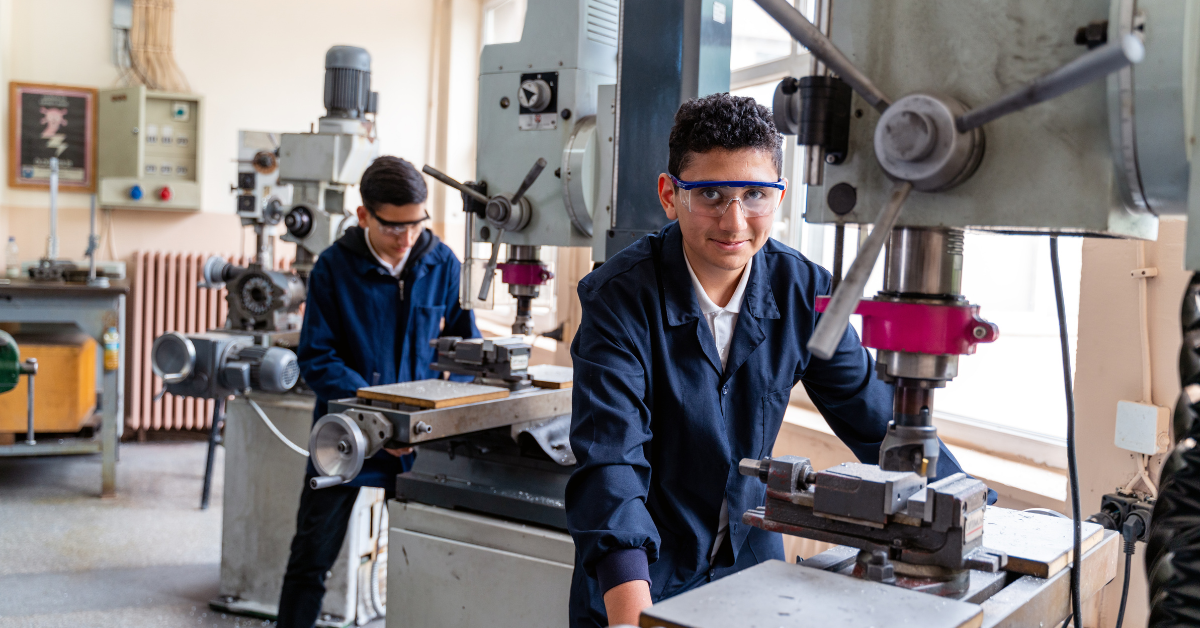
For many skilled workers, the talent pipeline starts long before a job application. It often starts in a high school shop class. Career and technical education is one of the most direct ways we develop the future workforce, and the evidence behind it is strong. Students who take part in CTE are more likely to graduate from high school. They’re also more likely to complete a postsecondary program and stay in a job once they land it.
On paper, the route is clear. A student enters a program, builds skills, earns an industry-recognized credential and gets real experience through work-based learning and dual enrollment. But in reality, many students fall out along the way. They arrive interested, then drift. Some get placed in programs that don’t match what drew them in. Organizations see the same thing when an apprenticeship or upskilling track quietly loses people, and no one can say exactly why.
I’ve spent my career trying to understand the barriers that keep learners from getting the full benefit of CTE. Most recently, I wrapped up a three-year project focused on ensuring all learners can access and complete CTE programs.
What we learned translates directly to lessons for talent leaders: people rarely opt out because they feel they lack potential. More often, they encounter obstacles that organizations have not recognized yet.
Start with the data you already collect
Federal CTE law identifies “special populations,” including students with disabilities and multilingual learners, and programs must report completion rates for each population. Federal CTE funding is meant to reduce barriers for these learners so they can complete meaningful career-connected learning experiences. Massachusetts leveraged program data to flag programs with high numbers of these students, and my team partnered with nine districts to understand the barriers those students faced and how to keep them engaged through completion.
That kind of compliance data can tell you that a gap exists, but it rarely tells you why. Employers track similar numbers, such as completion rates for training programs or retention among early-career hires. Those numbers work best as a starting point for inquiry, not a box to check.
It’s the difference between measuring workforce diversity and understanding the employee experience. You might know who applied, who was hired, who received training and who was promoted. But those numbers alone don’t tell you whether people feel they belong, whether they have equitable access to development opportunities or where organizational practices might be creating barriers.
In our work, the goal was to move from using data to demonstrate compliance to using it as a tool for continuous improvement. We didn’t just hand teams a report. We built their capacity to ask better questions, involve the people most affected, identify barriers and test practical solutions.
Ask the people inside the pipeline
At Montachusett Regional Vocational Technical School, staff noticed a gap between the trades students were interested in early on and the programs where they eventually landed. To understand it, we helped counselors conduct empathy interviews with students and used the answers to build journey maps that traced each step from exploration to placement. From there, they developed student personas representing the range of learners moving through the school.
Those personas changed how instructors approached exploratory courses, including how they introduced different career pathways and represented the opportunities in each. They also gave staff a way to talk about learners without blaming individual teachers. That matters more than people expect. Teaching is personal work, and professional development that feels like a “gotcha” goes nowhere. Here, interest followed: When the school offered related training on designing for a wider range of learners, 27 instructors signed up. Organizers had expected 12.
For a talent team, the translation is straightforward. Interview employees at the moments they tend to stall, such as just after onboarding or midway through a certification. Map the steps you’re asking them to take. Then walk those steps as someone facing a barrier would.
Give employees more than one way to share feedback
At Blue Hills Regional Technical School, a 2023 equity audit found that students from marginalized backgrounds felt disconnected from school culture. Male students were also largely absent from leadership roles. Rather than stopping at the findings, the school turned to student voices. It created a survey called “Dear Blue Hills,” which let students reply in writing, by audio recording or by video.
That choice sounds small, but it matters. A standard survey, with its multiple-choice questions and rating scales, asks people to fit their experiences into categories someone else created, and it only hears from people comfortable with that format. A student who would never write three paragraphs about feeling out of place might record a two-minute voice memo. Offering options is central to universal design for learning, the evidence-based framework now embedded in federal education policy, which asks us to give people multiple ways to engage and multiple ways to show what they know.
The school wanted to know whether students felt seen, valued and connected to their school community. The flexible format gave educators a richer picture of student identity, belonging and school culture, and helped them spot opportunities to make the school more inclusive.
Most employee engagement surveys follow the standard model: a grid of multiple-choice questions plus a comment box. The employees most at risk of leaving may be the least likely to fill in that box. A survey might tell you that 70 percent of employees feel they belong, but not why the other 30 percent don’t, what their experiences look like or what needs to change.
Accessible workforce development keeps the standard and widens the path
Some leaders hear “accessible” and worry about lowered standards. In every program I’ve worked with, the standard stayed put. What changed was how many people could reach it.
Employers need qualified people moving through every stage of the pipeline. Skills-focused routes work best when they’re designed for the full range of people who might walk them, including those whose barriers never show up on a résumé.
Blue Hills also showed that inclusion can’t belong to one department. The work meant bridging academic and vocational teachers—two groups that don’t always work together—and helping educators and school leaders treat inclusion as a shared responsibility rather than a job for specialists. Teams examined data together, listened to students and reflected on what they were learning. Instead of assuming they understood why students might struggle or feel disconnected, they asked students directly and used the answers to inform their decisions.
Organizations face a similar split among HR, talent acquisition, learning and development and the managers who supervise employees. Each group might be doing its job well, but each sees a different piece of the employee experience. Recruitment focuses on getting people in the door, L&D on training and managers on performance. What can get lost is the experience of the person moving through that system.
So, start small. Pick one place in your talent pipeline where people aren’t progressing as expected. Maybe it’s onboarding, a professional development program, an apprenticeship or the transition into a leadership role.
Bring together the teams responsible for that experience and talk to the people actually going through it. Don’t assume a traditional survey or meeting will work for everyone; give people different ways to share their experiences. Then use what you learn to make one meaningful change. It might be how you communicate an opportunity, how people access training or how you assess whether someone has developed a skill.
You do not need to redesign your entire talent system in one quarter. You need to identify one barrier, make one change and learn from what happens next.